




How intent-based routing enables efficient RWA settlements

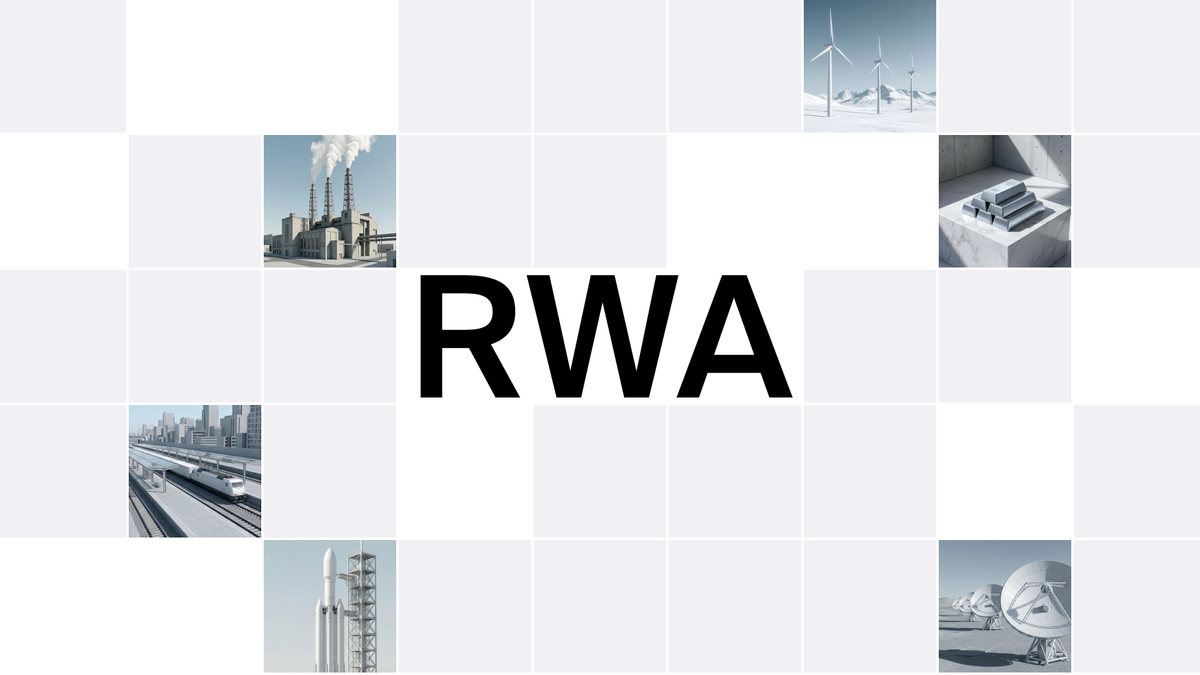
RWA trading often faces a simple problem: liquidity is not always where users need it. Intent-based routing can help by letting resolvers compete on asset sourcing, routing flexibility and execution quality.
These days, RWA issuers face one major challenge. Once assets are on-chain, how can they become easy to access and trade?
Public DEX liquidity for RWAs is often thin, fragmented and exposed to high price impact. At the same time, direct minting and redemption usually support only a limited set of assets, often USDC.
That creates friction for buyers and limits distribution for issuers.
Intent-based swap routing, like on 1inch, helps address that friction. Users express a simple intent — for example, “I want to buy this RWA with this asset at this rate” — while resolvers compete to fulfill it.
For RWA markets, this can make settlement more flexible. Resolvers can source inventory, route through supported assets or compete to offer better pricing without forcing every trade through shallow public pools.
Why RWA liquidity is different
Most DeFi tokens rely on open-market liquidity. If there is enough liquidity across DEXes, aggregators can route swaps through those pools.
RWAs work differently.
In many cases, the deepest source of liquidity is not a public DEX pool. It may come from issuer-linked flows, inventory held by market participants or secondary-market venues.
To mint or redeem an RWA directly, a participant usually has to use a limited set of supported assets, often USDC.
This creates an asset-path problem.
If an RWA can only be minted with USDC, a user holding WBTC, ETH or another token first has to swap into the required asset and then move through the issuer’s minting flow.
That makes RWA settlement more fragmented than a simple token swap.
How intent-based routing changes the flow
Intent-based routing changes the user experience.
Instead of asking you to manage every step, 1inch intent-based swaps let you define the desired result. You choose the asset you want to sell, the RWA you want to receive and the acceptable rate.
After that, resolvers compete to execute the order.
A resolver can decide how to source the RWA. It may use available secondary-market liquidity. It may use its own inventory. It may route your asset into USDC or another supported asset first.
You do not need to manage these steps manually.
This is the key benefit of intent-based settlement: you focus on the outcome, while professional market participants compete on execution.
A simple example
Imagine you want to buy an RWA linked to NVIDIA using WBTC.
Without intent-based routing, you may have to:
- swap WBTC into USDC or another supported asset;
- find a venue where the RWA is available;
- check whether liquidity is deep enough;
- manage price impact and timing across each step.
With intent-based swaps, you can simply create an intent to buy that RWA with WBTC.
Resolvers can then compete to deliver the asset at the requested rate. One resolver may route through USDC. Another may use existing inventory. Another may find a better secondary-market path.
From your perspective, the process is a single intent-based swap.
Why resolvers matter
Resolvers are the execution layer in intent-based swaps.
For RWA trades, this role is especially important because resolvers can compete on liquidity sourcing and pricing. They can take on the operational risk of sourcing and holding RWA inventory, making it available on secondary markets where public DEX pools are too thin.
This means execution is not limited to one shallow pool.
If public liquidity is sufficient, a resolver can use it. If not, a resolver can use inventory or search for another route. If the user starts with WBTC, ETH or another asset, the resolver can find an efficient path into the asset needed for settlement.
The result is a smoother user experience and a more flexible settlement process.
Why this matters for larger RWA trades
The efficiency gap becomes even clearer with larger trades.
If you want to move a large amount, for example $1 mln worth of WBTC into an RWA, a shallow public pool may create major price impact. A direct DEX route might not be practical.
With intent-based routing, resolvers can search for the best execution path. They can combine market liquidity, inventory and stablecoin routing where available.
This can make RWA settlement more efficient than relying only on fragmented open-market pools.
The role of the Dutch auction
In intent-based swaps, resolvers compete through a Dutch auction mechanism.
You define the intent, and resolvers compete to fill it. This competition creates pressure to offer efficient execution because resolvers need to win the order while still managing their own costs and sourcing strategy.
For RWA trades, this model is useful because different resolvers may have different routes, inventory and pricing strategies.
One resolver may source the asset from the market. Another may use inventory. Another may find a better path from the user’s input token to the asset needed for settlement.
You do not need to know which path is used. You only need to decide whether the offered rate is acceptable.
RWA settlement needs more than simple routing
RWA trading is not just another token swap.
It often involves limited secondary-market liquidity, supported settlement assets, inventory constraints and fragmented access across venues. Standard routing through public DEX pools can be insufficient.
Intent-based routing addresses this by adding an execution layer between the user and the complexity behind the trade.
This is why intent-based swap protocols are especially relevant for RWAs. They can make settlement more practical, more flexible and more efficient by letting resolvers compete to handle the hard part.
Intent-based routing can unlock better RWA access
RWAs bring traditional assets on-chain, but they also bring new execution challenges.
Liquidity may not be where users expect it to be. Supported assets may be limited. Public pools may be too shallow for efficient settlement. Larger trades may need better routing and deeper sourcing options.
Intent-based swaps help abstract that complexity. Users can express the trade they want, while resolvers compete to deliver the result.
For RWA markets to scale, this kind of intent-based execution can be critical.
Disclaimer 1:
This content is for general information purposes only and does not constitute financial, investment, tax, or legal advice and is not a recommendation to buy or sell any particular digital asset or to employ any specific investment strategy.
Disclaimer 2:
Not available in the US, EU, UK and other restricted jurisdictions.
Explore 1inch intent-based swaps!
Share the article


 Copy done!
Recent Posts
How do I trade SpaceX RWAs?
SpaceX is one of the world’s most watched private companies. Its tokenized versions issued by Ondo and xStocks, will be available through 1inch on June 12.
DeFi infrastructure meets tokenized asset ecosystems
A collaboration between 1inch, Ondo and Ledger shows: the next phase of DeFi is being built through joint effort across the ecosystem.

How RWA trading works in 2026
RWA trading becomes easier to access, enabling more users to explore tokenized equities, collateral markets and new liquidity venues without getting lost in technical complexity.
